
Responses to the Problem of Drive-by Shootings
Your analysis of your local problem should give you a better understanding of the factors contributing to it. Once you have analyzed your local problem and established a baseline for measuring effectiveness, you should consider possible responses to address the problem.
The following response strategies provide a foundation of ideas for addressing your particular problem. These strategies are drawn from a variety of research studies and police reports. Several of these strategies may apply to your community's problem. It is critical that you tailor responses to local circumstances, and that you can justify each response based on reliable analysis. In most cases, an effective strategy will involve implementing several different responses. Law enforcement responses alone are seldom effective in reducing or solving the problem. Do not limit yourself to considering what police can do: carefully consider who in your community shares responsibility for the problem and can help police better respond to it. The responsibility of responding, in some cases, may need to be shifted toward those who have the capacity to implement more effective responses. (For more detailed information on shifting and sharing responsibility, see Response Guide No. 3, Shifting and Sharing Responsibility for Public Safety Problems).
As discussed in the previous sections, while drive-by shootings are often gang-related, they are also carried out by people who are not affiliated with gangs and who execute a drive-by shooting during the course of interpersonal conflict. These incidents are both random and unpredictable and do not lend themselves well to a problem-oriented response strategy. Therefore, most of the responses discussed below address those drive-by shootings carried out by gang members.
General Considerations for an Effective Response Strategy
1. Focusing on proximate causes. Given the complexity of factors driving gang membership, interpersonal violence, the facilitating influence of alcohol and drugs, and other motivations for drive-by shootings, police often feel overwhelmed by the prospect of addressing these root causes. A problem-focused approach suggests focusing on proximate causes, namely addressing those factors that make the drive-by shooting easier to carry out. For example, decreasing offenders' mobility in traveling to and from the targeted location or reducing the availability of weapons used to carry out drive-by shootings, while not addressing the underlying motivation, can frustrate the offenders' intention and result in a reduction of the problem.272. Targeting the activity, not the individual. One of the criticisms of civil gang injunctions and other measures that target individual group members is that they can inadvertently increase group cohesiveness.28 By focusing on the activity (i.e., drive-by shootings) rather than the individual's gang membership, police can avoid conferring additional status on gang membership. Further, community relationships are often strained by the community's perception that police are focusing unfairly on underprivileged minorities. By remaining focused on the harm caused, rather than group membership, police can reinforce their fair and unbiased approach to crime prevention.29 Many of the specific responses to drive-by shootings, discussed below, take this approach.
3. Understanding gang membership dynamics. Although not all drive-by shootings are carried out by gang members, a large proportion are motivated by the desire to join a gang, enhance one's status, satisfy peer expectations, establish dominance, or exact revenge in the gang's name. Knowledge of local gang dynamics, affiliations, rivalries, and tensions is essential to be able to understand and intervene effectively in the drive-by shooting problem.3
Specific Responses to Reduce Drive-by Shootings
Reducing Weapon Availability or Prevalence§
§ Responses that intensify enforcement activities, target high-risk offenders, or obtain consent to search private property must be supported by precise documentation that will protect the department from alleged civil rights violations if challenged in court.
4. Conducting crackdowns. Enhancing police visibility and intensifying enforcement actions can effectively reduce the number of weapons available for use in drive-by shootings and other forms of violence.31 This response is also commonly referred to as directed patrol, saturation patrol, and proactive patrol.§§ After deploying additional officers to a specific geographic area (i.e., saturating the area), police are directed to stop people for any offense in which probable cause exists (i.e., directed patrol). Most often, motorists are stopped for traffic violations to ascertain whether the person has a weapon and whether it can be seized legally.† Focusing on specific people exhibiting suspicious behaviors can yield a greater number of weapons and arrests than a general strategy that does not target high-risk people or specific behaviors.32§§ See the POP Guide titled The Benefits and Consequences of Police Crackdowns (Scott 2003) for a more thorough discussion of crackdowns.
† This approach has been used successfully in Kansas City, Mo.; Indianapolis; and Dallas; among other places (see Sherman, Shaw, and Rogan 1995 [PDF]; McGarrell, Chermak, and Weiss 2002 [PDF]; and Fritsch, Caeti, and Taylor 1999). In Kansas City, Mo., directed patrol activities using traffic stops resulted in a 65 percent increase in gun seizures and a 49 percent reduction in gun violence (e.g., homicides, drive-by shootings) versus a comparison area, without causing displacement (Sherman, Shaw, and Rogan 1995 [PDF]).
Police can also set up roadblocks or checkpoints to identify and confiscate illegal weapons.‡ A careful strategy should be developed to avoid claims of unlawful searches or racial profiling.33 In addition, police should try to minimize the inconvenience to law-abiding residents. Police should meet with residents and community group leaders to explain the initiative and gain their support before implementation.34 Further, officers should be trained to treat residents with respect and to clearly explain the reason for their being stopped. Community support is also vital, and thus police should meet with community leaders, businesspeople and residents whom crackdown activities will affect. One benefit to this approach is that crackdowns and checkpoints do not require complex coordination with other agencies and therefore can be implemented relatively quickly.
‡ Crawford (1998) [PDF]offers several recommendations for ensuring that checkpoints do not raise Fourth Amendment concerns. Among them: the purpose of the checkpoint must clearly advance the public's interest in resolving a serious community problem; residents should be given advanced notice and signs should be posted; officers must give clearly worded explanations for the stop and should limit its duration; all cars should be stopped to diminish fear or surprise; searches should not be conducted unless the situation gives rise to one of the search warrant exceptions; and legal consult should be sought before implementation.
5. Initiating "sweeps" targeting known offenders. In addition to implementing crackdowns at high-risk locations, police can also target high-risk people using sweeps. In cooperation with probation and probation agencies, police can identify people already under criminal justice supervision who have a high propensity for gun violence.35 Using the probation's search provisions and parole agreements, teams of police and probation and parole officers can search offenders' residences, vehicles, and persons and confiscate any illegal weapons found.36 Not only can sweeps be carried out swiftly, but also they can have a rather immediate impact on the gun violence level, although these reductions may be hard to sustain over time. Further, these searches can be perceived as harassment of offenders who are complying with their supervision's conditions.6. Obtaining consent to search for and seize weapons. Parents of at-risk youth may be willing to allow police to enter their homes to search for and confiscate weapons.37 Locations likely to yield weapons can be identified through citizen information or from reports from other police units. Permission for the search is granted in exchange for a promise from police that neither the parents nor the youth will be charged or prosecuted if any weapons are found. Once the purpose of the search is explained and permission is granted, the responsible adult at the location should sign a consent form.§ "Consent to Search" programs are most effective when community expertise is engaged to identify locations, and when the police department places an absolute priority on seizing guns rather than prosecuting those who have them.38
§ In St. Louis, Mo., the Consent to Search program yielded a high cooperation level (98 percent of those approached gave consent for their homes to be searched) and a high gun volume (guns were seized in half the homes searched, totaling 402 guns in the first year) (Decker and Rosenfeld 2004). Also, see Rosenfeld and Decker (1996) for a sample consent form.
Identifying Situations With the Potential for Violence
7. Tracking current tensions and past altercations. Although some drive-by shootings occur spontaneously, many are catalyzed by past altercations and ongoing tensions between individuals or among rival gang members. Some bars and nightclubs have regular customers who may clash with other peer group members; gangs involved in the drug trade may have ongoing disputes over territory or may try to gain control of a certain segment of the drug market; more general gang rivalries may escalate into lethal violence. Most drive-by shootings are not isolated events, but rather are one in a series of confrontations. Specialized gang units can be an excellent source of intelligence on the alliances, rivalries, and ongoing tensions among local gang members, but this information must be shared freely with those addressing the drive-by shooting problem.39 For those incidents that are instigated at a bar or nightclub, police can work with owners and managers to identify and intervene in those tensions with a potential for escalation.§§ A targeted response requires knowledge about the specific people's activities, as well as the ongoing conflicts and alliances among other groups and gangs.40 This information can also be passed on to mediators in an effort to prevent lethal violence.§§§§§ See the POP Guide titled Assaults in and Around Bars (Scott and Dedel 2006) for ideas on how lower-level tensions can be dissipated before they escalate into gun violence.
§§§ Successful mediation of gang conflicts requires an awareness of the forces that can deter members from participating, and the needs and interests that must be satisfied once they agree to mediation. Jones (2002) identifies the following essential elements: 1) developing personal, positive, and trusting relationships between gang members and mediators; 2) offering "excuses" for participating in mediation that allow gang members to "save face"; 3) showing respect for the gang members and their conflict through the formality of the process and by requiring each side to listen to the other; and 4) personalizing members of each gang so that the hostility originating from group membership is less potent.
8. Coordinating with hospitals. Drive-by shooting victims may not be identified by police and may seek medical attention on their own. When hospital emergency rooms notify police of all patients seeking treatment for gunshot wounds, police may be able to identify and intervene in situations with a potential for retaliation and escalating violence.†† The National Violent Injury Statistics System at the Harvard School of Public Health is a national reporting system for gun-related injuries involving collaborations between the public health community and police. More information is available at http://www.hsph.harvard.edu/nviss/index.htm. The San Antonio (Texas) Police Department developed a "Cops and Docs" program to foster two-way communication between police and emergency medical services. When a shooting occurs and the police do not identify the victim, an alert is sent to the hospital with a description and the suspected injury's location. Conversely, when a gunshot victim seeks medical attention, the emergency room staff fax an injury report to police (David 1997 [PDF]).
9. Prohibiting high-risk people from riding in cars with each other. If police can identify gang members likely to be involved in drive-by shootings, they can use a variety of legal strategies to prohibit their riding in cars with each other. For example, such restrictions could be part of probation or parole conditions, or could be specified in a civil gang injunction. Assuming police are notified when the people violate these conditions, the violation could be sufficient probable cause for an arrest, possibly intercepting a planned shooting.Civil gang injunctions have been used to combat gangs in several jurisdictions in southern California and Texas. In collaboration with prosecutors, police gather evidence that individual gang members represent a public nuisance. This evidence can include the people's criminal histories, community police officers' statements, or residents' statements. The injunction prohibits named people from participating in specific activities (e.g., associating with other gang members, loitering in parks, carrying pagers); violations are grounds for arrest. Research on the injunctions' effectiveness is somewhat limited and has shown mixed results, but some jurisdictions have found them to result in decreased visibility of gang members, fewer episodes of gang intimidation, and reduced fear of crime among residents.41
Making Environmental Changes
10. Closing streets. When drive-by shootings are concentrated in a specific geographic area, closing streets that provide access to the neighborhood can reduce the ability of potential offenders to carry out drive-by shootings.§ These closures block entry points and escape routes, forcing offenders to take a more circuitous route to their destination and often requiring them to backtrack to leave the area. The specific architecture of the closures should specify which streets will be closed, how they will be closed, how they will be supported by patrol, how they will be monitored, and when or whether to remove the barriers.§§ Traffic flow is a key consideration: traffic should be routed into streets that offer the lowest opportunities for drive-by shooting and other crime (e.g., avoiding gang members' hangouts; focusing on routes bordered by open areas where the line of sight is unobstructed).42 This response is most effective when offenders are from outside of the target area, which can be difficult to ascertain given the complexity of gang turf boundaries. Given the impact of street closures on the residents' normal daily activities, a wide range of stakeholder concerns must be addressed before implementation.43 Coordinating with first responders—firefighters, EMTs, ambulance drivers, etc.—is essential to ensure their safe and efficient passage.§ The Los Angeles Police Department determined that drive-by shootings were clustered on the periphery of a specific neighborhood, which was linked to major thoroughfares. They erected barriers to block the major roads leading to and from the neighborhood and supplemented them with high-visibility foot, bicycle, and horseback patrols. An immediate reduction in serious crime (e.g., homicides and drive-by shootings) was evident (Lasley 1998 [PDF]).
§§ See the POP Guide titled Closing Streets and Alleys To Reduce Crime (Clarke 2004) for guidance on implementing this response and on the considerable effort required to address stakeholders' concerns.
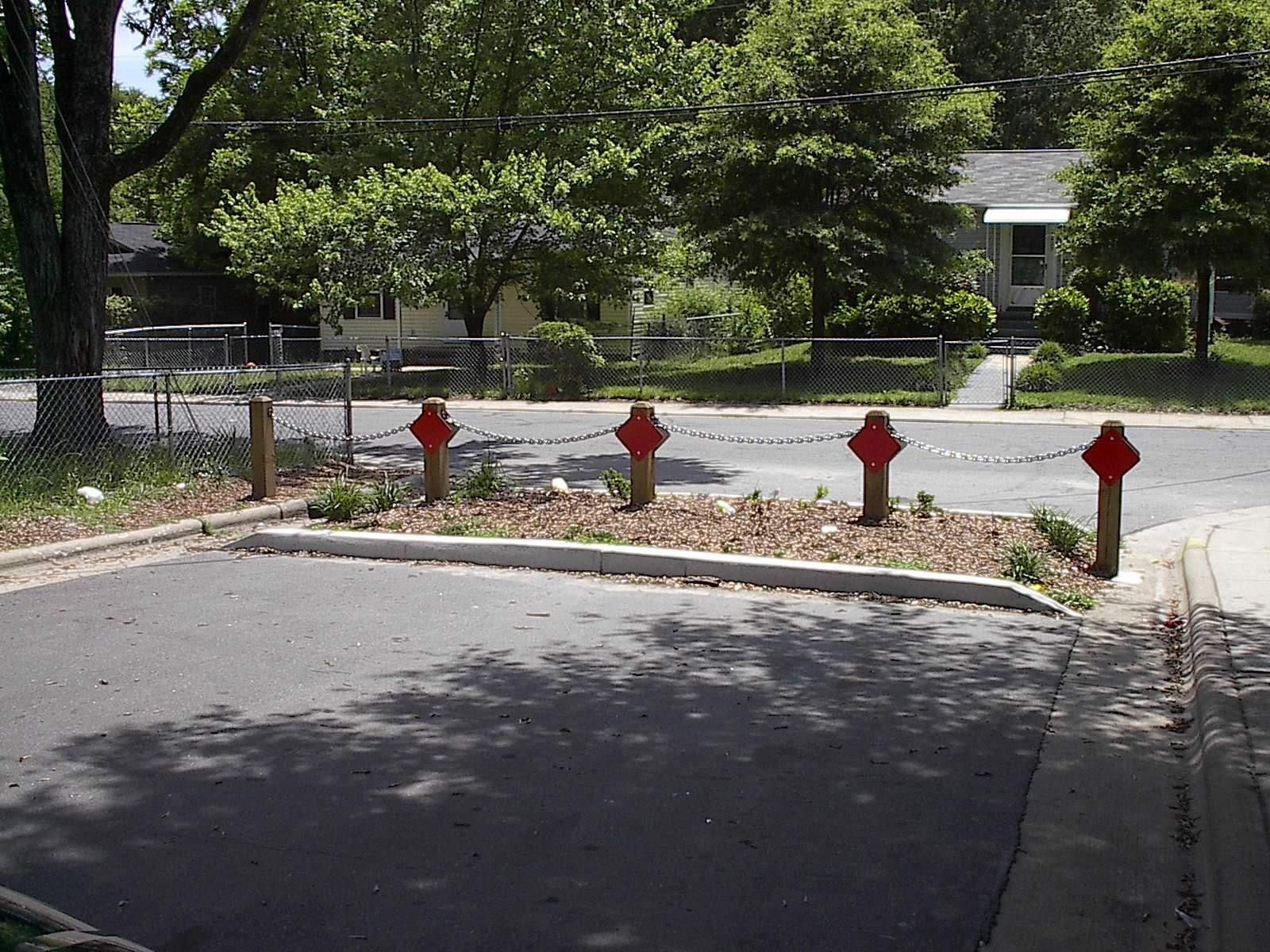
Closing streets that provide access to the neighborhood can be effective when drive-by shootings are concentrated in a specific geographic area. Credit: Ronald V. Clarke
§ The El Paso (Texas) Police Department's Response Team noted improved cooperation from witnesses and an increase in the number of cases cleared. Arrests were made within 24 hours in approximately 90 percent of shootings. In addition, the number of drive-by shootings decreased over time (El Paso Police Department 2002 [PDF]).
12. Creating witness incentives.Victims and other citizens who witness drive-by shootings are often reluctant to provide information to police. This reluctance may stem from a fear of reprisal, from general community norms discouraging cooperation with police, or from some planning among themselves for retaliation for the shooting.45 Minimizing the risks witnesses who want to cooperate face, strengthening ties with the community, and offering support in the form of financial assistance and temporary relocation can encourage those with information to come forward.§§ Improving the quality of information from witnesses helps police to identify offenders and to intervene in plans for retaliation.§§ See the POP Guide titled Witness Intimidation (Dedel 2006) for more information.
13. Implementing a "pulling levers" focused deterrence strategy. Significant decreases in the rate of gun violence have been noted by several jurisdictions that have implemented a "pulling levers" focused deterrence response.§,46 Targeting gang members with chronic involvement in serious crime, an interagency working group composed of police, prosecutors, and social service providers, among others, convenes groups of offenders, sets clear standards for their behavior (e.g., cease involvement in gun violence), and reinforces the message by "pulling every lever available" when standards are violated. The consequences for continued involvement in gun violence are specifically expressed, and pro-social alternatives (e.g., education and employment opportunities, drug treatment) are made available. If members of the target group are involved in gun violence, all of the members of the group are subjected to intensified supervision and other forms of enhanced enforcement. On-going communication with the targeted group makes a definitive connection between their involvement in gun violence and the consequences imposed.§ See the POP Guide titled Gun Violence Among Serious Young Offenders (Braga 2004) for specific guidance on implementing this response.
Responses With Limited Effectiveness
14. Targeting gun traffickers. As part of a comprehensive response strategy, some jurisdictions try to reduce gun violence by targeting gun traffickers. Any effort to restrict the flow of guns into a community is generally a good idea, although such broad efforts are unlikely to have a demonstrable effect on a localized problem. The effectiveness of this response is limited by the fact that many people get their guns informally, from friends and relatives, rather than buying them from a dealer.47 However, if the problem analysis demonstrates that straw purchasers are bringing large numbers of guns into the community, a response targeting these people would certainly be reasonable.§ In 1992, the New York Police Department cordoned off an eight-block area of the Bronx, denying access to all motorists except residents, commercial vehicle drivers, those dropping off children, and those visiting church. Others wishing to enter the area were allowed to park and travel within the boundaries on foot. The checkpoint operated on a random schedule of six hours per day, three days per week. This response's effectiveness in reducing the volume of drive-by shootings was not discussed in published research (Crawford 1998 [PDF]).
18. Impounding cars that are not properly registered. Similar to a DUI checkpoint, police can stop all vehicles to determine whether the vehicle is properly registered and the driver is appropriately licensed.50 If not, the car can be impounded for a short time, thus denying potential offenders access to one of the needed tools for a drive-by shooting. Although only one jurisdiction has published research reporting this response's limited effectiveness, like other responses in this section, the low yield of weapons and inconvenience to residents suggest that it does not have sufficient power to decrease the number of drive-by shootings substantially.

Free Bound Copies of the Problem Guides
You may order free bound copies in any of three ways:
Online: Department of Justice COPS Response Center
Email: askCopsRC@usdoj.gov
Phone: 800-421-6770 or 202-307-1480
Allow several days for delivery.
Email sent. Thank you.
Drive-By Shootings
Send an e-mail with a link to this guide.
* required
Error sending email. Please review your enteries below.
- To *
Separate multiple addresses with commas (,)
- Your Name *
- Your E-mail *
Copy me
- Note: (200 character limit; no HTML)
Please limit your note to 200 characters.