
Responses to the Problem of Underage Drinking
Your analysis of your local problem should give you a better understanding of the factors contributing to it. Once you have analyzed your local problem and established a baseline for measuring effectiveness, you should consider possible responses to address the problem.
The following response strategies provide a foundation of ideas for addressing your particular problem. These strategies are drawn from a variety of research studies and police reports. Several of these strategies may apply to your community's problem. It is critical that you tailor responses to local circumstances, and that you can justify each response based on reliable analysis. In most cases, an effective strategy will involve implementing several different responses. Law enforcement responses alone are seldom effective in reducing or solving the problem. Do not limit yourself to considering what police can do: carefully consider whether others in your community share responsibility for the problem and can help police better respond to it.
General Considerations for an Effective Response Strategy
1. Reducing the community's overall alcohol consumption. Any efforts to reduce a community's overall drinking have the potential to reduce underage drinking as well. Changing the norms about alcohol's role in the community can affect young people as well as those legal to drink. Specific responses could include discouraging price discounts on alcohol, restricting the hours or days retailers can sell alcohol, or limiting the number of community alcohol outlets.- State, local, and campus police agencies
- County prosecutor's and city attorney's offices
- State and local elected officials
- Local high schools, colleges, and universities
- Parent organizations such as the Parent-Teacher Association and Mothers Against Drunk Driving
- Student organizations such as the student council, athletics associations, Students Against Drunk Driving, and Interfraternity Council
- Community recreation programs and athletic programs
- Community and neighborhood programs such as Crime Watch and Neighborhood Watch
- Alcohol licensing bureaus and ABC boards
- Local bars and restaurants, and alcohol wholesalers and distributors
- Local retailers and distribution centers; and media advocacy groups
† See DeJong and Langford (2002) for a useful table of strategies that illustrate the importance of approaching the problem from various levels and focusing on the environment that sustains the behavior.
4. Understanding your state's laws regarding underage drinking. All U.S. states have laws governing minors' purchase and possession of alcohol. However, the specifics of the laws vary widely, and their usefulness in constructing responses can be limited by unusual wording or loopholes. 44 When considering responses that alter penalties or apply new sections of law to the problem, it is vitally important to consult with your jurisdiction's prosecutor to ensure the law's interpretation supports your intentions.‡‡ You can find a description of each state's statutes at www.nllea.org/reports/ABC EnforcementLegalResearch.pdf.
5. Avoiding overwhelming the court system. Stepping up enforcement efforts nearly always results in an increase in court cases. If the system is not prepared to handle the increase, and offenders are not quickly sanctioned, the response's effectiveness may be undermined. For this reason alone, it is often worthwhile to develop responses that do not rely on the application of criminal penalties. Some jurisdictions have anticipated this issue and have included court representatives in the project-planning phase, to get their cooperation in handling the increased number of cases,45 or have enlisted them as partners to create alternative sanctions for offenders, such as community service-based diversion programs. 46Specific Responses to Underage Drinking
Responses That Target the Motivation to Drink
6. Implementing a "social norms" program. Some interventions use a harm-reduction approach. In other words, they attempt to reduce how much or how often young people drink, rather than try to prevent underage drinking altogether, which some see as unrealistic, particularly among college students.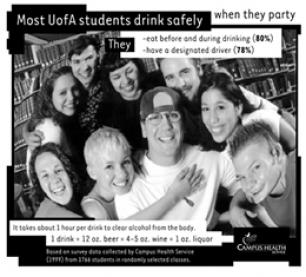
Many universities have developed a wide variety of visual aids to correct students' misperceptions of typical drinking behavior among their peers. Source: University of Arizona Social Norms Media Campaign, see http://www.socialnorm.org/
† While there is research to substantiate the effectiveness of social norms marketing programs, other studies cast doubt on their effectiveness. For example, Wechsler et al. (2003), compared student drinking patterns at colleges that employed social-norms marketing programs and those that did not. Over a three-year period, no decreases in various measures of alcohol use were evident at schools with social norms marketing programs. In fact, increases in monthly alcohol use and in total volume consumed were observed at some schools.
7. Raising underage drinkers' awareness of their behavior's impact on other people. Informing underage drinkers that their drinking adversely affects their peers, and that their peers are no longer willing to tolerate it, can encourage young people to reduce their alcohol use. 49 These campaigns should take care not to reinforce an institution's reputation as a "party school" or encourage the ostracism of nondrinkers. 50 They should direct those interested to further resources and information.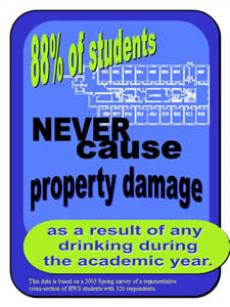
Posters and flyers raise awareness of the second-hand effects of drinking. Source: Hobart & William Smith College's Alcohol Education Project, see http://academic.hws.edu/alcohol/posters/posters
† See Walters (2000) for sample feedback forms.
‡ Several companies publish reference books of each states ID cards. For example, see http://www.idcheckingguide.com/
Many states' ABC boards provide free responsible-beverage-service-and-sales training to licensed establishments. Some states require such training for licensing, and others provide specific incentives for businesses that participate voluntarily. These programs inform participants about state and local ordinances concerning alcohol sales to minors, and about penalties for breaking the law. Further, they help owners and managers to develop establishment-level policies and practices to help employees carry out their legal obligations. Essential elements of effective service and sales policies include: 56
- Establishing 21 as the minimum age for everyone who serves or sells alcohol
- Ensuring that staff know their legal responsibilities
- Regarding underage sales
- Ensuring that staff know the establishment's policies and the consequences for violating them
- Requiring ID from all customers who appear to be under 30
- Developing specific guidelines and providing training on valid forms of ID
- Monitoring staff compliance and enforcing consequences for violations
Good training programs offer skill-development exercises, such as: 57
- How to identify a fake ID, how to confiscate it, and what to do with it once confiscated
- How to determine whether an adult is buying alcohol for someone underage, and how to refuse service
- How to resist pressure to serve or sell alcohol to an underage customer
- How to refuse service without creating a tense situation
Businesses should inform customers about their participation in such programs, both to encourage community support for responsible business practices and to deter underage youth from trying to buy alcohol or gain entry.
11. Enforcing minimum-age purchase laws. The primary means to enforce minimum-age purchase laws is to conduct compliance checks of businesses that sell alcohol for use either on or off premises. Compliance checks use underage volunteers who try to gain entry and alcohol service at bars or restaurants, or buy alcohol at stores. The volunteer is directed to be truthful about his or her age, if asked, and to present legitimate ID. If the volunteer is able to buy alcohol, the server and manager are cited for violating the minimum-age purchase law. In some jurisdictions, if a clerk or bartender appropriately denies service to an underage volunteer, the alcohol board notifies the business owner and encourages the owner to congratulate and reward the employee for obeying the law.58- Selecting underage volunteers who clearly look underage, and whose diverse characteristics may help to avoid bias or other factors that may influence sales rates
- Training volunteers on how to make a purchase: how to act, what to say, and how to respond to questions
- Selecting location, time of day, and frequency of operations
- Choosing the type and amount of alcohol to buy
- Addressing a variety of operational issues, such as deploying officers, issuing citations, recording or observing transactions, keeping records, and working with the media
† See Alcohol Epidemiology Program (2000) [Full text]and Willingham (n.d.)[Full text] for two excellent guides on designing compliance investigations.
Given that the overall goal is to reduce alcohol sales to minors, and not to issue a high volume of citations, it is important to give retailers, bars, and restaurants notice that random and ongoing compliance checks will be conducted. 59 Such notice, and prior consultation with local prosecutors, can also help to prevent entrapment claims.
Some jurisdictions supplement compliance investigations with "Cops-in-Shops" operations that station a police officer in an establishment, as either a customer or an employee, to apprehend underage people trying to buy alcohol. Establishments cooperating in these operations post a sign in the window notifying customers that a police officer may pose as an employee, and advising them of the penalties for underage purchases. While this enforcement strategy has not been rigorously evaluated, case studies suggest that "Cops-in-Shops" programs can effectively supplement compliance checks, although they should not substitute for them. 60 One of the main benefits of these operations is on-the-job training on identifying fake IDs and detecting typical physical and behavioral characteristics of minors—and of adults buying alcohol for them. 61
12. Conducting undercover "shoulder tap" operations. One of the main ways that young people obtain alcohol from commercial sources is to ask strangers to buy it for them. In "shoulder tap" operations, an undercover operative approaches an adult outside a store and asks the adult to buy him or her alcohol. If the adult agrees and does so, he or she is cited for furnishing alcohol to someone underage. As with all undercover operations, decisions about the characteristics of the volunteers used, the scripts delivered, the types of establishments and potential buyers targeted, the time of day, and other concerns are paramount to the effectiveness of the response. Very few of these operations have been evaluated, but case studies suggest that highly publicized operations that generate a large number of citations are likely to have a deterrent effect and reduce the amount of alcohol minors obtain through third parties. 62- Administrative: These penalties involve restrictions, suspensions, or revocations of business licenses if retailers do not follow state and local standards of conduct.
- Criminal: These penalties apply to the person who sells alcohol to a minor. They may include fines, probation, or imprisonment, and they may be noted on a criminal record.
- Civil: These penalties are commonly called "dramshop liability," and refer to lawsuits for monetary damages for any harm caused by minors served alcohol by retailers.
Responses That Target Social Access to Alcohol
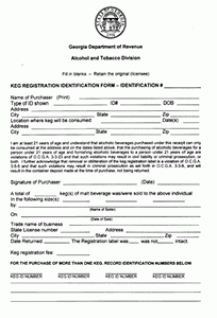
Many states use keg registration to link information about those who purchase a keg to the keg itself. Buyers are required to complete a form at the time of purchase. The keg is marked with a permanent sticker or tag. Source: Georgia Department of Revenue
Responses That Target Locations Where Drinking Occurs
17. Developing house party guidelines, registration forms, and pre-party walk-through procedures. Offering guidance on how to host a safe party at which minors cannot access alcohol can reduce underage drinking and the number of complaints received from neighbors bothered by noise, traffic, and other party byproducts. A number of police departments and college student organizations have developed guidelines for safe parties. These guidelines offer pre-party preparation and hosting tips, such as the following: 69- Inform neighbors about the party and ask them to contact the host first if they have any concerns or problems, rather than automatically calling the police.
- Take frequent walks around the outside of the house and property to assess noise levels.
- Do not permit underage guests to drink.
- Ensure that people who have been drinking do not drive.
- If the police do show up, turn off the music, stop the party, and talk calmly with the officers.
- Limit the number of people invited, and the number of people allowed on the property.
- Have sufficient chaperones to monitor the property and the guests for any problems.
- Be prepared to call an underage guest's parents if he or she appears to be under the influence of drugs or alcohol.
- Set a beginning and ending time for the party.
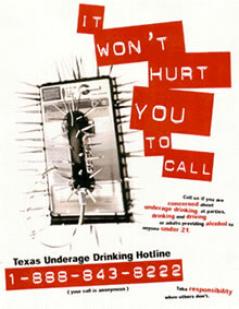
Well-publicized hotlines can be a valuable source of information about party locations. Source: Texas Alcohol Beverage Commision http://www.tabc.state.tx.us/enforce/hotline.htm
† The San Diego Police Department uses its College Area Party Plan to identify locations that have been the subject of repeated violations and complaints. Once a property has been identified as a CAPP property, a zero tolerance policy is enacted for all future complaints: no warnings are given, and proactive arrests are made. The Silver Gate Group (2001).
‡ You should consult legal counsel if you are uncertain about police authority in your jurisdiction to enter house parties without a warrant.
§ See Morrison and Didone (2000) and Casady (2002), accessible at www.ci.lincoln.ne.us/city/police/pdf/nuparty.pdf.
20. Imposing fines for each underage person drinking at a party. Large monetary penalties for providing alcohol to minors can be an effective deterrent to groups and organizations that regularly host parties where underage drinking occurs (e.g., fraternities and sororities). Issuing a summons to the responsible adult for each underage guest found drinking at a party can be financially devastating. One jurisdiction issued 70 summonses at one event, resulting in a fine of over $20,000 to the host. 71 The financial liability from large parties where alcohol distribution is not controlled has caused a number of national Greek organizations to require that their properties and social functions be alcohol-free. 72 When fine amounts are modest, party hosts may conclude that they are a small cost compared with the revenue they get from charging admission.† See Fisher (1999) and National Advisory Council on Alcohol Abuse and Alcoholism (2002) for detailed response guides for college campuses.
Responses That Focus on the Consequences of Underage Drinking
25. Applying administrative sanctions rather than criminal penalties. Criminal penalties are meant to serve as a deterrent. However, severe criminal penalties for underage drinking-related offenses (e.g., possession, attempted purchase, use of fake ID) are seldom enforced and have not proved a big deterrent. 79 In part, the lack of widespread, consistent enforcement is due to the burden on prosecutor and court resources, and a reluctance to enforce stiff penalties for what is perceived as a minor offense. Criminal sanctions are often neither swift nor certain, which undermines their deterrent effect. In contrast, less severe penalties (e.g., fines, community service) are more likely to be enforced and may be a greater deterrent. 80Suspension of a minor's driver's license in response to an alcohol violation—whether or not the offense involved a vehicle—is the penalty for breaking use/lose laws. For youths not yet licensed to drive, use/lose laws generally delay the issuance of a driver's license for a specified amount of time. These laws have been linked to a reduction in vehicle-related alcohol problems, 81 but raise constitutional concerns. 82 Use/lose laws have been extended to cover the use of a fake ID. Many states have recently increased the penalties for using a fake ID, and have publicized these changes to ensure that young people are aware of the consequences for doing so.† Keep in mind that extending driver's licensing sanctions to nondriving offenses almost certainly will increase offenses such as driving with a suspended or revoked license and eluding a police officer.
† For example, Virginia's ABC board created a pamphlet, available at http://www.abc.state.va.us/Educatio n/fakeid/FakeID.pdf.
26. Applying informal social control. While there have been no evaluations of informal social control's impact on underage drinking, we know that young people are often more powerfully influenced by teachers, coaches, mentors, peers, and parents than they are by the threat of formal sanctions. Enlisting the help of responsible adults who have relationships with young people not only can prevent expensive criminal justice sanctions that often take some time to be imposed, but also sends a powerful message about the community's intolerance for underage drinking. For example, when police cite high school or college athletes for underage drinking, notifying their coaches of the infractions can lead to creative consequences that hold the offenders accountable but do not saddle them with a criminal record. Similarly, parents and schools revoke privileges (e.g., driving, participating in social events) or impose disciplinary sanctions in response to citations for underage drinking. Military commanders may discipline underage soldiers who come into contact with police. Police may find opportunities to support these forms of informal social control.Responses With Limited Effectiveness
27. Using school-based education, awareness, or values-clarification programs. Student orientation, alcohol awareness weeks, and curriculum infusion are typical interventions found on high school and college campuses. The assumption guiding these efforts is that people make wiser choices if they know the facts about alcohol. Although this may be true, information alone is usually insufficient to change behavior. 83 Evaluations of these stand-alone programs have found no effect on alcohol use or alcohol-related consequences. 84

Free Bound Copies of the Problem Guides
You may order free bound copies in any of three ways:
Online: Department of Justice COPS Response Center
Email: askCopsRC@usdoj.gov
Phone: 800-421-6770 or 202-307-1480
Allow several days for delivery.
Email sent. Thank you.
Underage Drinking
Send an e-mail with a link to this guide.
* required
Error sending email. Please review your enteries below.
- To *
Separate multiple addresses with commas (,)
- Your Name *
- Your E-mail *
Copy me
- Note: (200 character limit; no HTML)
Please limit your note to 200 characters.